Contamination
Cross-contamination, measured rather than assumed
Contamination research lets you spend your vigilance where it counts, instead of worrying uniformly about everything.
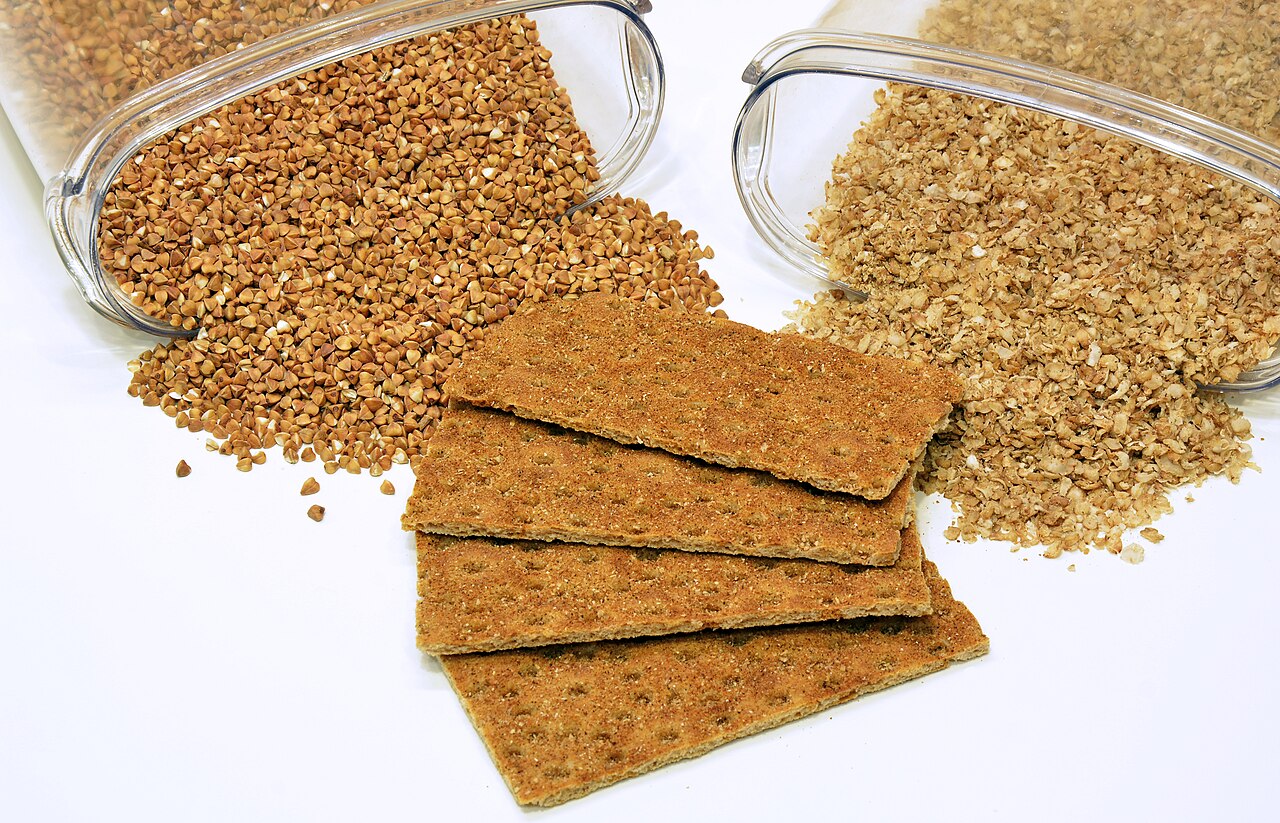

Where contamination actually happens
The pooled evidence [1][2] points consistently at food service rather than at manufacturing. Certified manufacturers test; restaurant kitchens rarely can. A kitchen producing both gluten-free and standard dishes shares surfaces, utensils, oil and airborne flour, and the staff turnover that characterises hospitality makes sustained protocol adherence difficult.
| Setting | Relative risk | Main mechanism |
|---|---|---|
| Restaurant with shared fryer | Highest | Oil carries gluten between batches |
| Restaurant with shared pasta water | Highest | Direct transfer into the dish |
| Bakery serving gluten-free items | Very high | Airborne flour settles on everything |
| Bulk bins and scoops | High | Shared scoops, stray grains |
| Home kitchen with mixed use | Moderate | Toasters, boards, butter, colanders |
| Certified packaged product | Low | Tested to ≤ 20 ppm |
What is worth doing at home
- Separate toaster or toaster bags. Crumbs are the classic vector and this is a cheap fix.
- Own butter, jam and spreads. Double-dipping with a crumb-covered knife is the most common household breach.
- Separate colander. Wheat pasta residue survives washing in a mesh colander remarkably well.
- Wooden boards and scratched plastic. Porous and scored surfaces retain gluten. Replace or dedicate them.
- Rinse and sort dried pulses. Stray wheat grains in bulk pulses are documented, not theoretical.
- Do not bother with separate cupboards. Sealed packaging does not transfer gluten. Effort spent here is effort not spent on the fryer question.
Naturally gluten-free foods are the blind spot
The meta-analysis is explicit about this [1]: foods that contain no gluten grain, and therefore carry no label, are contaminated at meaningful rates because nothing in the supply chain is designed to prevent it. Oats are the extreme case and are covered on the oats page, but pulses, quinoa, spices and cornmeal all appear in the testing literature.
This is the argument for certified versions of boring ingredients. It feels absurd to buy certified lentils. The testing says otherwise.
Checking whether it is working
If antibodies stay elevated or symptoms persist, the question is whether gluten is still getting in. Urinary gluten immunogenic peptide measurement answers that objectively [7] and is increasingly used before labelling someone as having refractory disease — because unrecognised exposure is far more common than true refractoriness. More on complications and refractory disease.
Common questions
Can I eat at a restaurant that uses a shared fryer?
Is airborne flour a real risk?
Do I need separate cookware?
Are gluten-detection devices worth it?

.jpg)
Related reading
References
Every citation below links to the original peer-reviewed record on PubMed or via DOI. Nothing here is a substitute for medical advice.
-
Evaluation and interpretation of Hawthorne and other trial-related effects in Celiac Disease: A systematic review and meta-analysis Pjetraj D, Lionetti E, Pulvirenti A, et al. · Digestive and liver disease : official journal of the Italian Society of Gastroenterology and the Italian Association for the Study of the Liver · 2026 · Meta-analysis DOIPubMed 42498599
-
Gluten contamination in labelled gluten-free, naturally gluten-free and meals in food services in low-, middle- and high-income countries: a systematic review and meta-analysis Guennouni M, Admou B, El Khoudri N, et al. · The British journal of nutrition · 2022 · Meta-analysis DOIPubMed 34753529
-
Gluten contamination in food services and industry: A systematic review Falcomer AL, Santos Araújo L, Farage P, et al. · Critical reviews in food science and nutrition · 2020 · Systematic review DOIPubMed 30582343
-
ACG clinical guidelines: diagnosis and management of celiac disease Rubio-Tapia A, Hill ID, Kelly CP, et al. · The American journal of gastroenterology · 2013 · Clinical guideline DOIPubMed 23609613Full text
-
Systematic review: tolerable amount of gluten for people with coeliac disease Akobeng AK, Thomas AG · Alimentary pharmacology & therapeutics · 2008 · Systematic review DOIPubMed 18315587
-
Novel probiotic preparation with in vivo gluten-degrading activity and potential modulatory effects on the gut microbiota Nikoloudaki O, Celano G, Polo A, et al. · Microbiology spectrum · 2024 · Randomised controlled trial DOIPubMed 38860826Full text
-
Efficacy and Acceptability of Dietary Therapies in Non-Constipated Irritable Bowel Syndrome: A Randomized Trial of Traditional Dietary Advice, the Low FODMAP Diet, and the Gluten-Free Diet Rej A, Sanders DS, Shaw CC, et al. · Clinical gastroenterology and hepatology : the official clinical practice journal of the American Gastroenterological Association · 2022 · Randomised controlled trial DOIPubMed 35240330
-
Determination of Urinary Gluten Immunogenic Peptides to Assess Adherence to the Gluten-Free Diet: A Randomized, Double-Blind, Controlled Study Monachesi C, Verma AK, Catassi GN, et al. · Clinical and translational gastroenterology · 2021 · Randomised controlled trial DOIPubMed 34613954Full text
-
Celiac Disease, Gluten Sensitivity, and Diet Management Wall E, Semrad CE · Current gastroenterology reports · 2024 · Review DOIPubMed 38865028
-
The global burden of coeliac disease: opportunities and challenges Makharia GK, Singh P, Catassi C, et al. · Nature reviews. Gastroenterology & hepatology · 2022 · Review DOIPubMed 34980921
-
American College of Gastroenterology Guidelines Update: Diagnosis and Management of Celiac Disease Rubio-Tapia A, Hill ID, Semrad C, et al. · The American journal of gastroenterology · 2023 · Journal article DOIPubMed 36602836